In New Zealand They're Farmers. In the US They're Ranchers.
An argument for why you should stop thinking of translation as a technical checkbox and start using it to build an experience that’s unique to each of your users, based on where they are, not just what language they speak.


Most "localized" websites are the English site run through a translator. The words are correct sure but it's not tailored to the person reading it because there is so much more to localization than just a new language.
Good localization keeps the product and reworks how it's told, so the person reading it in another region feels like you built the page for them.
Halter didn't translate anything. They reworked everything.
A really good example of localization is Halter. They make smart collars that let you fence and move cattle from your phone. They started with dairy farmers in New Zealand, then launched in the US.
Here's the interesting part. The US market speaks the same language, so there was nothing to translate but they reworked everything anyway:
- The words. New Zealand coverage talks to farmers. The US site talks to ranchers.
- The photos. Different landscapes, different operations, the types of cattle locals actually recognize.
- The proof. Testimonials from American ranchers, not Kiwi dairy farmers.
- The product story. The US pitch is built around large beef ranches, which run very differently from New Zealand dairy farms.
Same company. Same product. Same language. A completely different experience on the website.

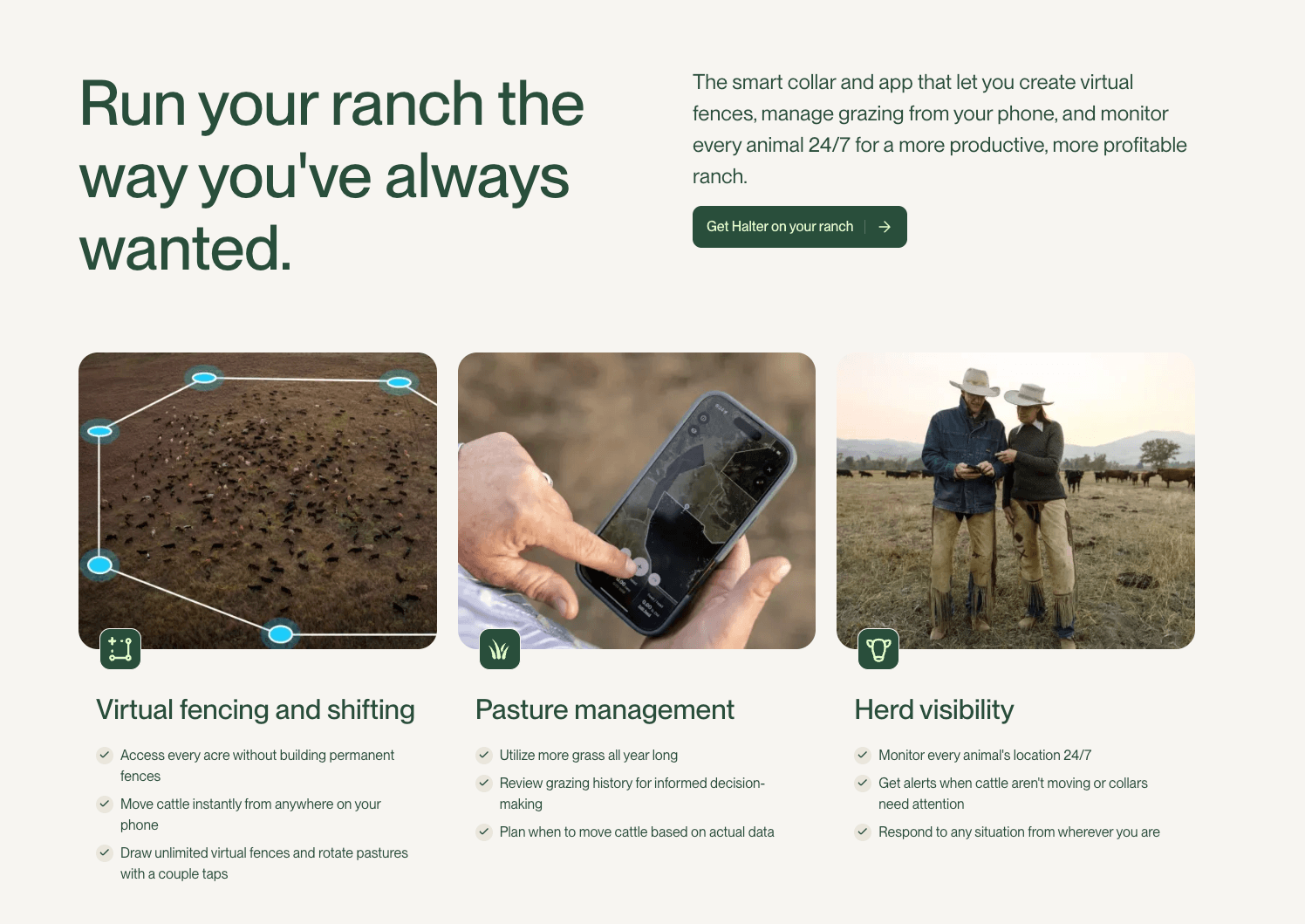
A rancher from Wyoming landing on a page full of Waikato dairy farmers wouldn't think anything was wrong. He'd just leave, because nothing on it was for him.
Same language doesn't mean same audience
A client in Paris and a reader in Montreal both read French. Give the Paris client playful Quebec copy full of local slang and they'll bounce. Give the Montreal reader France French and it reads stiff and foreign. Same story with US and Canadian English: spelling, units, holidays, even what you call the business.
We see this all the time with clients: one French version, written for "French speakers," that lands a little off for everyone. We used to do it too. One French version felt like the job was done. It wasn't, and we now build versions around where the reader is, not just which language they speak.
Translation is the floor, not the job
Translating what you already have gives that reader nothing extra. You're converting words, not talking to anyone.
Keep the product. Then sit down and ask how someone in that region would actually read the page:
- What do locals call it? Industry terms, job titles, the name of the thing itself.
- What do they search for? Keywords change between regions, even in the same language. Don't translate your keywords. Research them.
- What do they expect to see? People, landscapes, equipment, weather. Would this customer picture something different?
- How do they use it? Halter's US customers don't run the operation the New Zealand ones do. Yours might not either.
- What are they already dealing with? Local regulations, seasons, problems your product solves in a different way there.
- Who vouches for you there? Local testimonials, logos and case studies beat great ones from somewhere else.
A directly translated website is like a tourist reading from a phrasebook. Technically correct but everyone can tell you're not from here.
Start with the pages that sell
You don't need to rework 80 pages.
- Rework first: your homepage, your two or three most-visited product or service pages, and any campaign landing pages. Sales and promo content is where the reader decides.
- Just translate: privacy policy, terms, legal pages, support docs. Let's be honest, nobody reads your privacy policy for the vibe (and if they do, your legal dept is probably not happy).
- Everything else: probably fine translated. Going deeper than that is overthinking it.
A quick word on AI. Products that we use like Weglot, Webflow Localization and most platforms now have AI translation built in and it's a fine start. A translated site beats no site. But it gets you translation. This post is about the step after.
Don't add a language just because you can
Check the data before you add anything. A new language "because someone out there might want it" is more pages to maintain and nobody reading them.
There are two good reasons to build a version:
- It's where the business is going. Even if a region is only 10% of your traffic today, if you're pushing into that market, lean in. The site should match the strategy.
- The region is already converting. Not inflated traffic numbers. Real inquiries and real sales. When that happens, the market is telling you something.
If neither is true, wait.
One exception: if your business is based in Quebec, a French site isn't optional. The law requires it, regardless of whatever your analytics say.
"Won't multiple versions be a nightmare to maintain?"
Only if you rebuild everything. You're reworking a handful of high-impact pages and translating the rest. The site structure stays the same, the content inside it changes.
Most platforms handle this natively. You swap copy and images per locale on the same page, without building and babysitting a second website or page.
Look at your site like a local would
Open your website and pretend you're a customer in the other country. Do they deal with regulations you never mention? Do they use your product differently? Do they even use it the way you're advertising it right now?
Look at it as objectively as you can. You're going to find quite a few things that need to change.
And if your product names don't survive the trip either, that's a whole other post. It's coming, and yes, there are puns.
Know of a brand that nails this, or one that really doesn't? Send it our way.